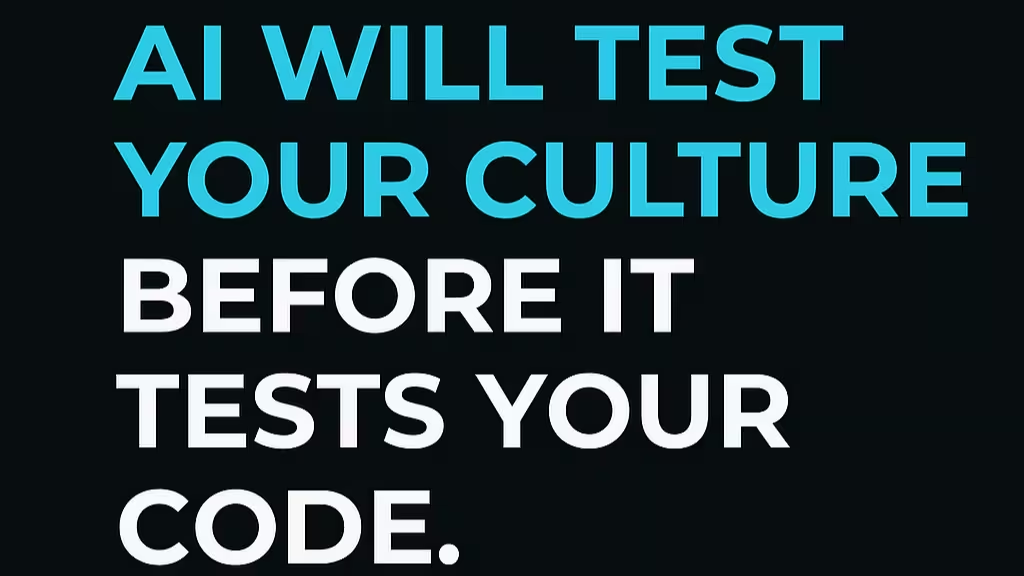
Artificial Intelligence (AI) is redefining the boundaries of cybersecurity. For senior
executives and CISOs, the challenge is no longer just about securing systems — it’s
about securing trust. As AI becomes embedded in every layer of business
operations, it’s testing not only the resilience of technology but the integrity of
organizational culture.
The Shift: From Systems to Culture
In the past, cybersecurity leadership focused on technical defences — firewalls,
encryption, and access controls. Today, those remain essential, but they’re no longer
sufficient. AI-driven threats exploit human behaviour, decision-making, and even
corporate values.
The most advanced security architecture can still fail if the culture behind it is
complacent, siloed, or overly reliant on automation. The question for leaders is no
longer “Is our code secure?” but “Is our culture prepared?”
The Cultural Vulnerabilities AI Exposes
AI doesn’t just amplify cyber capabilities — it amplifies weaknesses. Organizations
that lack awareness, transparency, or accountability are at greater risk. Common
cultural gaps include:
● Overtrusting automation: Blind faith in AI tools can lead to missed anomalies
and delayed responses.
● Ignoring human factors: Employees remain the first line of defence, yet many
organizations underinvest in awareness and training.
● Avoiding difficult conversations: Many leadership teams discuss AI’s
potential but not its ethical or security implications.
These gaps create fertile ground for social engineering, insider threats, and AI-driven
manipulation.
What Strong Cybersecurity Cultures Do Differently
The most resilient organizations treat cybersecurity as a shared responsibility and
digital trust as a strategic asset. They:
● Embed trust into company values. Security isn’t a compliance checkbox — it’s
part of the brand promise.
● Empower every employee. From executives to interns, everyone understands
their role in protecting data and reputation.
● Foster transparency. Open discussions about AI’s risks and limitations build
awareness and accountability.
● Balance automation with human judgment. AI enhances decision-making, but
human oversight ensures ethical and contextual accuracy.
The Leadership Imperative
For senior executives, evolving cybersecurity leadership means moving beyond
technical oversight to cultural stewardship. It requires:
● Championing digital trust as a board-level priority.
● Investing in continuous learning to keep teams adaptive and informed.
● Modelling responsible AI use through governance, ethics, and transparency.
AI will continue to test systems, but it will test leadership first — through the
decisions made, the values upheld, and the culture sustained.
The Future of Cyber Leadership
The next generation of cybersecurity leaders will be defined not by how well they
manage technology, but by how effectively they inspire trust. As AI reshapes the
threat landscape, the organizations that thrive will be those that align innovation with
integrity.
Technology may power security, but culture sustains it.